
How to Identify Calcium Deficiency in Crops
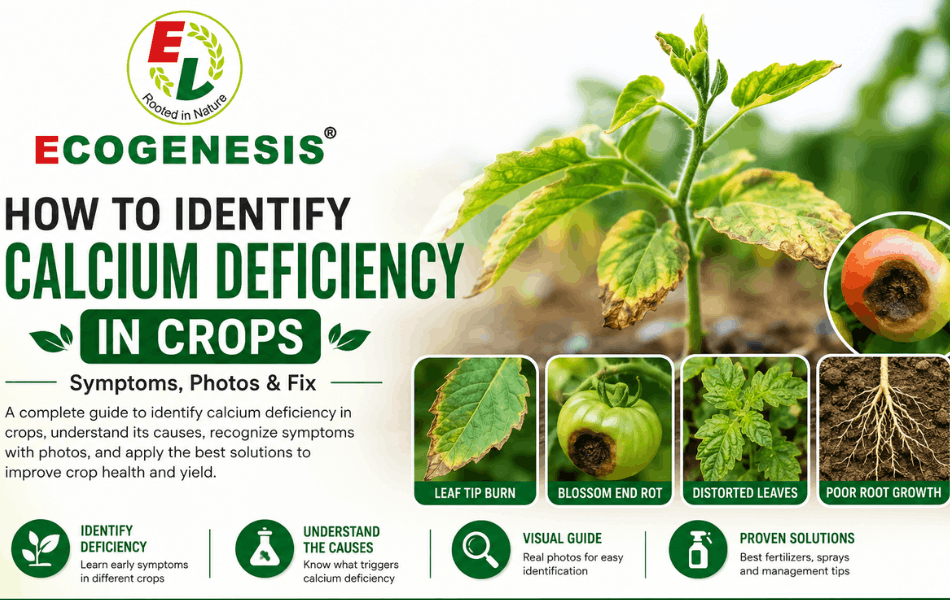
How to Identify Calcium Deficiency in Crops
Calcium deficiency in crops is one of the most common nutrient disorders affecting vegetables, fruits, cereals, and horticultural plants worldwide. Although calcium is classified as a secondary nutrient, its role in plant growth is extremely important because it helps build strong cell walls, supports root development, and improves resistance against environmental stress. Farmers often overlook early calcium deficiency symptoms because they resemble damage caused by drought, disease, or other nutrient imbalances. However, untreated calcium deficiency can significantly reduce crop quality and yield, resulting in economic losses. Tomatoes may develop blossom end rot, apples can suffer from bitter pit, and young leaves in vegetables may become distorted or necrotic. Understanding calcium deficiency in crops symptoms is essential for timely diagnosis and correction. Early identification allows growers to implement effective management practices before irreversible damage occurs, ensuring healthier plants and improved productivity throughout the growing season.
What is Calcium Deficiency in Crops?
Calcium deficiency in crops occurs when plants are unable to absorb or transport enough calcium to support normal growth and development. Calcium is an essential nutrient responsible for maintaining cell wall strength, regulating enzyme activity, promoting root growth, and improving disease resistance. Unlike mobile nutrients such as nitrogen or magnesium, calcium cannot easily move from older tissues to new growth. As a result, symptoms generally appear first in rapidly growing areas like young leaves, shoot tips, flowers, and fruits. Deficiency may occur because of low soil calcium levels or due to unfavorable environmental conditions that limit calcium movement inside the plant. Crops suffering from calcium deficiency often exhibit distorted leaves, tip burn, poor fruit development, blossom end rot, and reduced overall vigor. If left untreated, the deficiency can severely impact crop productivity and market value.
The role of calcium extends beyond structural support. It also contributes to nutrient transport, root elongation, water regulation, and cellular communication within plants. Adequate calcium improves fruit firmness, extends shelf life, and enhances resistance to diseases and physiological disorders. Healthy calcium levels are particularly important in crops such as tomatoes, peppers, potatoes, grapes, apples, and leafy vegetables. Farmers often focus heavily on nitrogen, phosphorus, and potassium while neglecting secondary nutrients like calcium. However, maintaining balanced calcium nutrition is essential for achieving high yields and superior crop quality. Soil testing, proper irrigation, and balanced fertilization programs are effective tools for preventing calcium deficiency and maintaining long-term soil fertility. Understanding the importance of calcium is the first step toward identifying and correcting deficiency symptoms before they cause irreversible losses.
Why Calcium is Essential for Plants
Calcium performs several vital functions that directly influence plant health and productivity. One of its primary roles is strengthening plant cell walls, which provide structural stability and protect tissues from physical damage and disease-causing organisms. Calcium also helps regulate enzyme activity and cellular processes necessary for growth. Root development depends heavily on sufficient calcium availability because actively growing root tips require a constant supply of this nutrient. Strong root systems improve nutrient and water uptake, enabling plants to withstand drought and other environmental stresses. Calcium further contributes to flower formation, fruit development, and seed production. Without adequate calcium, plants may experience stunted growth, weak stems, poor fruit quality, and increased susceptibility to diseases. These effects emphasize why calcium is considered indispensable for sustainable crop production.
Another important function of calcium is maintaining membrane integrity and facilitating communication between plant cells. Calcium ions act as signaling molecules that help plants respond to environmental changes such as heat stress, drought, and pathogen attacks. In fruits and vegetables, adequate calcium improves texture, firmness, and shelf life, reducing post-harvest losses. Tomato, pepper, cucumber, apple, and grape growers particularly benefit from maintaining optimal calcium levels because fruit quality directly affects profitability. Calcium also enhances nutrient balance by supporting the efficient uptake and utilization of other essential elements. Even when plants receive sufficient nitrogen and potassium, calcium deficiency can limit growth and reduce yield potential. Therefore, successful nutrient management programs should always include calcium monitoring and correction strategies to ensure healthy plant development and maximize agricultural productivity.
What Causes Calcium Deficiency in Crops?
Understanding the causes of calcium deficiency in crops is essential because deficiency does not always mean that the soil lacks calcium. In many cases, calcium is present in adequate amounts, but environmental conditions or nutrient imbalances prevent plants from absorbing and transporting it efficiently. Calcium moves through the plant along with water, which means any factor affecting water uptake can indirectly cause deficiency symptoms. As a result, farmers often observe leaf tip burn, blossom end rot, distorted young leaves, and poor root growth even when soil tests show sufficient calcium levels. Identifying the underlying causes helps growers choose the correct treatment strategy instead of applying unnecessary fertilizers. Proper diagnosis not only saves input costs but also improves crop quality, yield, and overall nutrient management. Knowing why calcium deficiency occurs is the first step toward preventing long-term damage and maintaining healthy, productive plants.
Modern agricultural practices can also contribute to calcium deficiency symptoms. Intensive cultivation, repeated harvesting, and excessive use of chemical fertilizers gradually disturb nutrient balance within the soil. High applications of potassium, ammonium nitrogen, and magnesium fertilizers often compete with calcium uptake, making it difficult for roots to absorb sufficient amounts. Environmental stresses such as drought, waterlogging, high humidity, and fluctuating temperatures further restrict calcium movement to rapidly growing tissues. Since calcium is immobile inside plants, newly developing leaves and fruits are usually affected first. Crops like tomatoes, peppers, cucumbers, grapes, apples, and leafy vegetables are particularly sensitive because they require a continuous supply of calcium during active growth. Understanding these factors enables farmers to implement balanced fertilization programs and adopt irrigation practices that minimize the risk of calcium deficiency throughout the crop cycle.
Low Calcium Availability in Soil
One of the most obvious causes of calcium deficiency is insufficient calcium levels in the soil. Sandy soils, highly weathered soils, and regions receiving heavy rainfall often contain low amounts of available calcium because nutrients are easily leached beyond the root zone. Continuous cropping without replenishing calcium through fertilizers or soil amendments can gradually deplete reserves and create nutrient imbalances. In such conditions, plants struggle to obtain enough calcium for cell division and tissue development, resulting in symptoms like weak stems, leaf deformation, and poor fruit quality. Soil calcium availability also depends on the concentration of other nutrients and the physical structure of the soil. Compacted soils with poor aeration restrict root growth and limit nutrient absorption, increasing the likelihood of deficiency. Regular soil testing is one of the most effective ways to determine whether low calcium availability is responsible for crop symptoms.
Acidic Soil Conditions
Soil pH plays a major role in determining calcium availability to plants. Highly acidic soils with a pH below 5.5 often contain reduced levels of exchangeable calcium because nutrients are leached more rapidly under acidic conditions. Excess hydrogen ions present in acidic soils compete with calcium ions, making them less available for root absorption. In addition, aluminum toxicity commonly associated with acidic soils can damage root systems and further impair nutrient uptake. Plants growing under these conditions frequently exhibit symptoms such as distorted young leaves, poor root development, and reduced growth. Acidic soils are widespread in many agricultural regions and can significantly limit crop productivity if not managed properly. Farmers experiencing recurring calcium deficiency problems should always evaluate soil pH as part of their nutrient management program.
Drought Stress and Irregular Irrigation
Water availability has a direct influence on calcium transport inside plants because calcium moves primarily through the transpiration stream. During periods of drought or inconsistent irrigation, plants absorb less water, reducing the movement of calcium to actively growing tissues. As a result, deficiency symptoms often appear in young leaves and fruits even when soil calcium levels are adequate. Blossom end rot in tomatoes and peppers is a classic example of calcium deficiency caused by irregular moisture supply rather than a lack of calcium in the soil. High temperatures and rapid plant growth can further increase calcium demand, making crops more susceptible to deficiency. Therefore, maintaining consistent soil moisture is essential for ensuring efficient calcium uptake and preventing physiological disorders.
Major Causes of Calcium Deficiency in Crops
|
Cause |
Effect on Plants |
|
Low soil calcium |
Weak growth and poor fruit development |
|
Acidic soil |
Reduced calcium availability |
|
Drought stress |
Restricted calcium transport |
|
Excess potassium or magnesium |
Competition with calcium uptake |
|
Poor root development |
Lower nutrient absorption |
|
High humidity |
Reduced transpiration and calcium movement |
|
Waterlogging |
Damaged roots and nutrient deficiency |
Calcium Deficiency in Crops Symptoms: Early Signs, Leaf Symptoms, Fruit Damage, and Visual Identification
Recognizing calcium deficiency in crops symptoms at an early stage is critical for preventing serious yield losses and maintaining crop quality. Unlike mobile nutrients such as nitrogen, calcium cannot move from older leaves to younger tissues. Because of this, deficiency symptoms usually appear first in newly developing leaves, shoot tips, flowers, and fruits. One of the earliest signs is the abnormal growth of young leaves, which may become curled, narrow, distorted, or develop brown margins. As the deficiency progresses, growing points may stop developing altogether, causing stunted plants and poor root systems. Calcium deficiency also weakens cell walls, making tissues more susceptible to diseases and environmental stress. In severe cases, flowers may abort, fruits may crack or rot, and plants can suffer irreversible damage. Identifying these warning signs quickly allows farmers to apply corrective measures before significant losses occur. Since symptoms vary among crops, understanding their appearance in leaves, stems, roots, and fruits is essential for accurate diagnosis and effective treatment.
Symptoms on Young Leaves
Young leaves are usually the first parts of the plant to show signs of calcium deficiency because calcium is not readily transported from older tissues. Newly emerging leaves may appear small, misshapen, twisted, or curled, giving plants an unhealthy appearance. Leaf edges often become irregular and may exhibit chlorosis followed by necrosis. In severe cases, the growing tips of plants die back, resulting in reduced branching and poor canopy development. These symptoms are especially common in vegetables such as tomatoes, peppers, cabbage, cauliflower, and leafy greens. Since rapidly growing tissues require a continuous supply of calcium, any interruption in nutrient transport quickly affects their development. Farmers should closely monitor new growth because early detection allows timely correction and prevents more serious physiological disorders.
Leaf Tip Burn and Curling
Leaf tip burn is one of the most recognizable symptoms of calcium deficiency and serves as an important warning sign for growers. The condition begins with slight discoloration along the margins of young leaves, which gradually turns into brown, dry, and necrotic tissue. Leaf curling often accompanies tip burn, causing leaves to appear distorted and uneven. In leafy vegetables, the affected tissue may collapse, reducing market quality and increasing susceptibility to disease. Calcium deficiency weakens cell walls, making leaves less resistant to physical damage and environmental stress. Since calcium transport depends heavily on water movement, fluctuating moisture conditions frequently worsen tip burn symptoms. High humidity and poor transpiration can also reduce calcium movement to leaf tissues, leading to localized deficiency even when calcium is present in the soil.
Root and Stem Symptoms
Calcium plays a vital role in root development, and deficiency can severely impair the growth and function of root systems. Plants lacking calcium often develop short, weak, and poorly branched roots that are less efficient at absorbing water and nutrients. Root tips may become discolored or die, limiting the plant's ability to support vigorous growth. Because healthy roots are essential for nutrient uptake, calcium deficiency frequently leads to secondary deficiencies and increased susceptibility to drought stress. Crops with damaged root systems typically exhibit stunted growth and reduced resistance to diseases caused by soil-borne pathogens. Farmers may observe poor plant establishment and uneven crop stands, especially in vegetables and fruit crops with high calcium requirements.
Fruit Disorders Caused by Calcium Deficiency
Calcium deficiency often causes some of the most economically damaging disorders in fruits and vegetables. One of the best-known examples is blossom end rot in tomatoes, peppers, and eggplants. This condition begins as a small water-soaked spot at the blossom end of the fruit, which gradually enlarges and turns dark brown or black. Affected fruits become unmarketable and may rot before harvest. Apples commonly develop bitter pit, characterized by small, sunken lesions that appear during storage. Grapes, strawberries, and watermelons may experience fruit cracking and reduced shelf life due to weakened cell walls. These disorders occur because calcium is essential for maintaining tissue integrity and preventing cellular breakdown.
Early Symptoms vs Severe Symptoms of Calcium Deficiency
|
Early Symptoms |
Severe Symptoms |
|
Slight leaf curling |
Dead growing points |
|
Young leaf distortion |
Severe necrosis |
|
Leaf tip discoloration |
Extensive tip burn |
|
Reduced root growth |
Root tip death |
|
Small fruits |
Blossom end rot |
|
Weak stems |
Stunted plants |
|
Reduced vigor |
Significant yield losses |
|
Minor tissue damage |
Fruit cracking and rotting |
Visual Symptoms of Calcium Deficiency in Different Crops (Photos Guide)
Visual identification is one of the most effective ways to diagnose calcium deficiency in crops symptoms before severe damage occurs. Although laboratory testing provides accurate results, farmers often rely on visible symptoms in leaves, stems, roots, flowers, and fruits to identify nutrient problems in the field. Calcium deficiency generally affects rapidly growing tissues because calcium is relatively immobile within plants. As a result, young leaves and developing fruits show symptoms first. The exact appearance of deficiency varies from crop to crop, but common signs include leaf distortion, tip burn, blossom end rot, fruit cracking, and weak root systems. Recognizing these crop-specific symptoms helps growers distinguish calcium deficiency from diseases and other nutrient disorders. Early visual diagnosis allows timely intervention and prevents irreversible yield losses. Understanding how calcium deficiency appears in different crops is particularly important for vegetable and fruit producers, where quality defects can significantly reduce market value.
Calcium Deficiency Symptoms in Tomato Plants
Tomatoes are among the most sensitive crops to calcium deficiency, and one of the most common symptoms is blossom end rot. This disorder begins as a small, water-soaked area near the blossom end of developing fruits. Over time, the affected tissue becomes dark brown or black and gradually enlarges, making the fruit unsuitable for sale or consumption. Young leaves may also appear curled and distorted, while plant growth becomes less vigorous. Rapid vegetative growth, irregular irrigation, and excessive nitrogen fertilization often increase the incidence of blossom end rot. Even when sufficient calcium exists in the soil, inadequate transport to developing fruits can trigger symptoms. Therefore, maintaining consistent soil moisture is critical for preventing this disorder.
Calcium Deficiency Symptoms in Chilli and Capsicum
Chilli and capsicum plants display symptoms similar to those observed in tomatoes. Young leaves may become distorted, curled, and pale, while growing tips lose vigor. One of the most visible signs is blossom end rot, which appears as dark, sunken lesions at the base of the fruit. As the disorder progresses, fruits become soft and susceptible to fungal infections. High temperatures and inconsistent irrigation commonly aggravate these symptoms. Since pepper plants have relatively high calcium requirements during fruit development, maintaining a continuous supply of calcium is essential for obtaining high-quality produce.
Calcium Deficiency Symptoms in Paddy, Wheat, and Maize
Field crops such as paddy, wheat, and maize are generally less susceptible to calcium deficiency than vegetables, but symptoms can still occur under acidic soil conditions or nutrient imbalances. Young leaves may become chlorotic and twisted, and root development may be restricted. In maize, newly emerging leaves often appear malformed, while plants exhibit reduced vigor and slower growth. Paddy crops grown in highly acidic soils may show poor tillering and weak root systems, which can ultimately reduce grain yield. Wheat plants suffering from calcium deficiency may develop stunted growth and impaired nutrient absorption.
Since symptoms in cereals are less dramatic than those observed in fruits and vegetables, calcium deficiency often goes unnoticed until growth reductions become significant. Soil acidity and poor root development are common contributing factors in these crops. Applying agricultural lime and improving soil fertility can help restore calcium availability and support healthy root growth. Balanced nutrient management and regular soil testing are particularly important for maintaining optimum productivity in cereal crops.
Calcium Deficiency Symptoms in Potatoes and Root Crops
Potatoes and other root crops require adequate calcium to produce healthy tubers and maintain storage quality. Deficient plants often exhibit distorted young leaves, reduced growth, and weaker stems. Tuber disorders such as internal browning and hollow heart are commonly associated with inadequate calcium supply. These physiological problems reduce marketability and increase post-harvest losses. Because tubers develop underground, calcium deficiency symptoms may remain hidden until harvest, making preventive management especially important.
Poor soil structure and irregular moisture conditions frequently contribute to calcium-related disorders in potatoes. Excessive nitrogen fertilization can also increase susceptibility by promoting rapid growth. Maintaining balanced fertilization and ensuring adequate soil moisture throughout the growing season are essential for producing high-quality tubers. Calcium applications through gypsum or calcium nitrate often improve tuber quality and storage performance.
Calcium Deficiency Symptoms in Fruit Crops
Fruit crops such as apples, grapes, citrus, strawberries, and watermelons are highly sensitive to calcium deficiency because fruit quality depends heavily on strong cell walls and tissue integrity. Apples commonly develop bitter pit, characterized by small, dark, sunken spots that appear during storage. Grapes and citrus fruits may experience cracking, poor firmness, and shorter shelf life. Strawberries often become soft and more susceptible to fungal diseases. These disorders significantly reduce market value and increase post-harvest losses.
Calcium deficiency symptoms in fruit crops are often linked to rapid fruit enlargement and uneven water supply. High nitrogen levels and excessive vegetative growth can further restrict calcium movement to fruits. Since damaged fruits cannot recover, preventive measures are essential. Foliar calcium sprays, balanced fertilization, and proper irrigation management help improve fruit quality and reduce storage disorders. Regular monitoring during flowering and fruit development stages enables growers to detect problems early and maintain profitable yields.
How to Identify Calcium Deficiency in Crops: Soil Testing, Leaf Analysis, and Diagnosis Methods
Correctly identifying calcium deficiency in crops symptoms is essential because many nutrient disorders produce similar visual signs. Calcium deficiency is frequently confused with boron deficiency, potassium deficiency, disease infections, or even herbicide injury. Applying the wrong treatment can increase production costs and delay recovery, leading to significant yield losses. Therefore, farmers should combine field observations with scientific diagnostic methods to accurately determine whether calcium deficiency is the underlying problem. Visual symptoms provide the first clues, but soil testing, plant tissue analysis, and pH evaluation offer more reliable confirmation. Since calcium is an immobile nutrient, symptoms generally appear in young tissues rather than older leaves, which helps distinguish it from deficiencies of mobile nutrients such as nitrogen or magnesium. By understanding these diagnostic approaches, growers can make informed decisions and implement corrective measures before the deficiency causes irreversible damage.
Field Observation and Visual Diagnosis
Field observation remains one of the simplest and most practical methods for identifying calcium deficiency in crops. Since calcium cannot be readily moved from older tissues to younger ones, symptoms usually appear first in developing leaves, growing points, flowers, and fruits. Farmers should carefully inspect young leaves for curling, deformation, chlorosis, and tip burn. Blossom end rot in tomatoes and peppers, bitter pit in apples, and fruit cracking in grapes are also strong indicators of calcium-related disorders. In severe cases, shoot tips may die back and plant growth becomes stunted. Comparing symptoms across different areas of the field can help determine whether environmental stress or nutrient deficiency is responsible. Uneven irrigation patterns, soil variability, and localized root damage often influence symptom distribution.
Soil Testing for Calcium Deficiency
Soil testing is one of the most reliable tools for diagnosing calcium deficiency and determining nutrient availability. Laboratory analysis measures exchangeable calcium levels, soil pH, organic matter content, and other factors affecting nutrient uptake. By understanding the chemical characteristics of the soil, farmers can identify whether low calcium availability is causing deficiency symptoms or whether environmental conditions are limiting absorption. Sandy soils and highly acidic soils are particularly prone to calcium depletion because nutrients are easily leached beyond the root zone. Regular soil testing enables growers to develop targeted fertilization programs that address specific deficiencies rather than relying on generalized recommendations. This approach improves nutrient efficiency and reduces production costs.
Plant Tissue Analysis
Plant tissue analysis provides a direct assessment of nutrient levels within the plant and is often used to confirm calcium deficiency when visual symptoms are unclear. This method involves collecting leaf samples and sending them to a laboratory for nutrient analysis. Tissue testing reveals whether plants are absorbing sufficient calcium and can detect hidden deficiencies before symptoms become visible. Because calcium is concentrated in actively growing tissues, sampling protocols usually focus on young leaves or recently matured foliage. Tissue analysis is especially valuable in high-value crops such as tomatoes, grapes, apples, and greenhouse vegetables, where nutrient imbalances can significantly affect quality and profitability.
Checking Soil pH and Calcium Availability
Soil pH has a major influence on calcium availability and should always be considered when diagnosing deficiency problems. Acidic soils with a pH below 5.5 often contain lower amounts of exchangeable calcium and may exhibit aluminum toxicity, which damages roots and restricts nutrient absorption. Even when calcium is present in the soil, unfavorable pH conditions can reduce its availability to plants. Consequently, recurring calcium deficiency symptoms are frequently associated with acidic soils. Measuring soil pH is relatively inexpensive and provides valuable information for determining appropriate corrective actions. Farmers experiencing persistent deficiency problems should prioritize pH evaluation as part of their nutrient management program.
How to Fix Calcium Deficiency in Crops: Best Fertilizers, Foliar Sprays, and Prevention Methods
Treating calcium deficiency in crops symptoms requires more than simply adding calcium fertilizers. In many situations, the soil already contains enough calcium, but plants cannot absorb or transport it efficiently because of poor root development, irregular irrigation, soil acidity, or nutrient imbalances. Therefore, effective correction involves improving both calcium availability and the environmental conditions that influence uptake. Early intervention is extremely important because damaged tissues and fruits cannot recover once symptoms become severe. However, timely treatment can protect new growth, improve fruit quality, and prevent further yield losses. Farmers should first identify the underlying cause of the deficiency and then select the most appropriate corrective measures. Depending on soil conditions and crop requirements, treatment may involve soil-applied fertilizers, foliar sprays, liming materials, or organic amendments. Combining these approaches with balanced irrigation and nutrient management ensures sustainable crop health and long-term productivity.
Applying Calcium Nitrate Fertilizer
Calcium nitrate is one of the most widely used fertilizers for correcting calcium deficiency because it provides highly soluble calcium along with readily available nitrogen. This fertilizer is particularly effective for vegetables and fruit crops where rapid correction is necessary. Tomatoes, peppers, cucumbers, strawberries, and greenhouse crops often respond positively to calcium nitrate applications because the nutrient is immediately available for absorption. Calcium nitrate can be applied through fertigation systems, drip irrigation, or conventional soil application methods. Since it supplies nitrate nitrogen rather than ammonium nitrogen, it minimizes nutrient competition and promotes efficient calcium uptake. Regular applications during flowering and fruit development stages help prevent disorders such as blossom end rot and improve fruit firmness and shelf life.
Using Gypsum for Soil Improvement
Gypsum, or calcium sulfate, is another excellent source of calcium and is particularly useful for soils that do not require pH adjustment. Unlike agricultural lime, gypsum supplies calcium without significantly altering soil acidity. This makes it suitable for alkaline or neutral soils where calcium deficiency occurs despite acceptable pH levels. Gypsum also improves soil structure by reducing compaction and enhancing water infiltration, which encourages healthy root development and better nutrient absorption. Crops grown in heavy clay soils often benefit from gypsum applications because improved aeration promotes stronger root systems and increases calcium availability. Field crops such as wheat, maize, and cotton frequently respond well to gypsum treatment.
Correcting Soil Acidity with Agricultural Lime
Soil acidity is one of the major causes of calcium deficiency, and agricultural lime remains one of the most effective tools for correcting this problem. Lime supplies calcium while increasing soil pH to levels that promote nutrient availability and healthy microbial activity. Highly acidic soils often contain low concentrations of exchangeable calcium and may also suffer from aluminum toxicity, which damages roots and restricts nutrient uptake. Applying lime improves root development, enhances phosphorus availability, and creates favorable conditions for overall plant growth. Crops grown in acidic soils frequently exhibit improved vigor and higher yields after liming because nutrient efficiency increases throughout the root zone.
Foliar Calcium Sprays and Liquid Calcium Fertilizers
Foliar calcium sprays provide a rapid method of supplying calcium directly to plant tissues and are widely used in fruit and vegetable production. These products are particularly valuable during flowering and fruit development stages when calcium demand is high. Calcium chloride, calcium nitrate, and specialized liquid calcium formulations are commonly used for foliar application. Regular spraying helps reduce physiological disorders such as blossom end rot, bitter pit, and fruit cracking. Because calcium movement within plants is limited, repeated applications are often necessary to maintain adequate levels in developing fruits and young leaves. Foliar feeding provides immediate benefits but should complement rather than replace soil fertility management.
Liquid calcium fertilizers are increasingly popular because they are easy to apply and quickly absorbed by plant tissues. These products are especially useful in greenhouse production systems and intensive horticulture. However, foliar sprays cannot correct severe soil deficiencies or compensate for poor irrigation practices. Their effectiveness depends on proper timing, spray coverage, and environmental conditions. Farmers should follow label recommendations and avoid spraying during extremely hot weather to prevent leaf injury. When integrated with soil amendments and balanced fertilization, foliar calcium sprays contribute significantly to improving crop quality and minimizing calcium-related disorders.
Organic Sources of Calcium
Organic farming systems rely on natural calcium sources to maintain soil fertility and support plant growth. Bone meal, eggshell powder, compost, and dolomite lime are commonly used to supply calcium gradually over time. These materials not only provide nutrients but also improve soil structure and microbial activity. Bone meal is particularly rich in calcium and phosphorus, making it suitable for vegetable and flowering crops. Eggshell powder decomposes slowly and contributes calcium to the soil while recycling household waste. Compost and well-rotted farmyard manure enhance nutrient retention and increase the availability of calcium and other essential elements.